Can I just pull my child out of school? Is that even legal?
The short answer is, yes, you can pull them out and it’s
legal. But each state has different
laws, but HSLDA knows all of them. If
you’re planning to homeschool, joining HSLDA is
a must, no matter which state you reside in, because they’ve got your back.
How
do I get started?
Homeschooling can be expensive if you don’t put some thought into it at the beginning. {See The Costs of Homeschooling.} The first thing you should do, especially if you are pulling kids out of public school, is to plan for an adjustment period. You might hear this referred to as ‘deschooling.’ This will give you time to take some notes and make a plan, but it also gives your student(s) time to transition. (The longer they were in public school, the longer this may take.) This is when your child comes to realize that the days of being lectured and provided answers have passed, and it is now time to be more proactive and take some responsibility for their learning. Trust me…they’ll come to appreciate this.
Deschooling also gives your family a chance to find a new
rhythm. Remember when everyone had to
pull their kids out of school, without warning, during COVID? People were overwhelmed. Their lives were being turned on a dime. This transitional time allows you to get past
the “argh! We’re together all. the. time.”
phase and into a more family-oriented groove.
I’m not gonna lie…it can be hard for some families, particularly those
who are accustomed to running all the time.
But you’ll get there.
Deschooling, however, doesn’t mean watching tv and playing video games every day. This is a chance to re-ignite that natural passion for learning. Take up a craft or art project. Read some books. Get outside. Take field trips. This is a chance to get back to the basics of learning.
Tips for Transitioning to Home-School
Keep a routine as best you can. Set up a daily schedule that includes work, rest, and play.
Try to regulate screen time. This may be difficult if classes are being held online, but try anyway.
Be patient with yourself and others.
Be willing to learn alongside your kids. You might find you enjoy the lessons!
If you are working from home, be willing to check in on your kids every 20-30 minutes to be sure they are doing their classes.
One fantastic option for families just starting out is called SchoolhouseTeachers. ..
One family membership covers all the kids…whether there are two or twelve…and everything you need to homeschool every subject for every grade!
There are varied course options, including streaming, interactive, and downloadable. We personally (here in rural-ville) tend toward the downloadable ones, but I know many families would rather have streaming.
Use promo code: SHARK20 right now and receive the low rate of $179 for TWO years—only $89.50/yr! You’ll also receive a FREE canvas tote and PRINT back issue of The Old Schoolhouse® Magazine (tote color and magazine issue will vary, no refunds). Every subject. Every grade. Every student.
But how am I supposed to get it all done in a day?
First-time homeschoolers generally try to replicate
public school at home. It’s what they know, and it’s familiar.
Trust me…many mommas have gone down this road before!
Learning to re-frame the day, however, is the first step
toward homeschool freedom. When you understand and accept that there is
considerable learning value is almost everything you do, it relaxes your
attitude toward school…which transfers to your students and makes for a more
enjoyable experience.
How to re-frame?
First, learn the lingo.
Does your child understand something? Wonderful! They have ‘comprehension.’
If you quiz your child on his ABCs, does he know them? Great! He just passed an ‘assessment.’
Second, master documentation.
Say your elementary student spent two hours outside,
skipping rope, playing with sidewalk chalk, catching bugs and examining them,
and making leaf prints. That’s physical education, art (or handwriting,
depending on what was drawn), science, and nature study!
Baking cookies together as part of holiday
preparations? This activity has math (measurement and time), chemistry,
reading, home economics, and nutrition lessons!
We’re not suggesting that everyday consist of this type of schooling, though there are families who do ascribe to this theory – it’s called Unschooling, and you can learn more about it here.
The point is that each day doesn’t need to consist of
books, papers, and pencils to ensure that learning is happening. When
children are excited about something, they’re sure to learn and retain more!
What
do I do about my special needs child?
This is a subject that’s near and dear to the Homeschool
House leadership, as each and every one of us has at least one special needs
child. You’ll find several articles on
our blog about this subject. Here are
just a few….
In a word, yes.
Benjamin Franklin once said,’ Failing to plan is planning to fail.’ What that means is that you need to have some
idea of goals before you start teaching.
Is college a goal? What about
learning to read by the end of the year?
Different ages require different goals.
Some parents plan an entire year in advance. Others plan for the month, or the week, while
some just plan for the day. How you
choose to plan is going to be largely dependent on your preferences.
Me? I’m a
planner. But I don’t like planning long-term
because things are always changing (hello…COVID, anyone?). After many years of homeschooling, our family
has found that planning for the week ahead works perfectly for us. Even then, there are some weeks when things
change and the planning book gets marked up.
Life happens.
Some people do their planning online, while others prefer to use a paper planning book. As part of the planning, you’ll review what’s coming up in each curricula subject, make sure you have materials and library books on-hand, and take into consideration any upcoming appointments during the school day.
If you’re planning for an entire month, plan to sit down
for about a full day to lay out exactly what needs to be done. If you’re
planning for a week at a time, prepare to spend about an hour laying out the
week’s work. Some people (no finger
pointing at one of our Shack leaders J )
prefer to write down at the end of the day what was accomplished….no planning
required and her book is never marked up with changes! Again….personal preferences.
Planning a Bit Easier
There are some curricula that take all of the planning
out the mix. A World of Adventure,
BookShark, Sonlight, My Father’s World…these are all curricula that provide the
planning sheets for you. It’s open and
go…just make sure that you have any materials on-hand for art or science
lessons (they’ll tell you what you need).
If you’re just starting your homeschool journey, and very anxious about
planning and making sure that everything is covered, you might start out with
something like this.
How
on earth do I homeschool multiple ages at once??
Whether you have two children or eight, homeschooling
multiple children is a juggling act. One
of the best things that you can do is have some ‘schooling together time’ so
that there is a set time when everyone comes together as a unit.
Teach Together
With children of about the same age – up to four years
apart – you can teach some of the subjects simultaneously. Curricula such as The Good & the
Beautiful, Gather ‘Round, BookShark, or A World of Adventure lend themselves
toward this type of family-style teaching, with cohesive read-alouds and
teaching time while each student gets an age-appropriate workbook.
Read-aloud time doesn’t have to mean that all the
children are lined up neatly and politely on the couch! Legos, coloring books, and other quiet play
toys are a great way to keep little (or not-so-little) hands occupied during
this time. Discuss the reading as a
family at the end of each session.
Unit Studies
Similar to the curricula cited above, unit studies allow
your entire family to work together on one topic, with each student researching
or studying at their own level. After a
family trip to the aquarium and some study-together time, a toddler might color
a page about seahorses, while a high schooler might do a research paper on the
same topic. Together, all of the
students could complete a science experiment, play a game, and do art projects.
Individual Subjects
While it’s easier to combine history and literature, subjects such as math and science need to be a bit more age-specific once students hit middle school. Again, if they are only a couple of years apart, students could still study together. Middle school, however, is when students begin to work independently, so this is a good opportunity to give them some of that freedom. For many families, math is the one that requires each student to have different, grade-appropriate lessons, and tends to take the most of mom’s time. An outside course, such as the Saxon Dive CDs, can really help here!
What
curriculum do I need?
Choosing the right curriculum for your family means first determining your family’s homeschooling style. Some families are strictly one style, while others prefer a blend of styles. Within the leadership of the Book Shack, we cover nearly every style imaginable…so if you ever have questions, just ask, and one of us will be glad to assist you. You can also check out reviews!
Your family might try out one style and find that it’s not for you. It may take a few years to settle down into the right fit for your family, and that’s completely normal. When contacting the Book Shack for assistance, however, it helps us to help you if you know your family’s preferred style.
What style is best for your family?
When choosing a style (and there’s a good chance you’ll change as your children grow), consider these questions…
What’s your teaching style?
What are your goals?
How do your kids learn best?
What values do you want to instill in your children?
What’s your lifestyle? Do you prefer routine or flexibility?
There are five of us here at the Homeschool House. DeeDee and Erin are our ‘people-people,’ while Nicole, Jennie, and myself do a lot of the behind the scenes work. It takes all hands, each with a different strength, to make it work!
Tonight, though, I want to write you from my own voice. My name is Yvie, and I run the website for the Homeschool House. If there’s been a tech glitch…well, it’s probably my fault. My apologies!
One of my sisters and her husband are active duty Coast Guard. They also have two young children who, until this week, were in day care and school. Like so many other families around the nation and world, they’ve found their lives suddenly turned upside down and have become overnight homeschoolers.
I sat down during the early part of this week and helped come up with a plan to help them educate the kids / keep them occupied so that she can continue to work from home at the same time. I’m making these same plans available to other families as well, in the hopes of alleviating stress for other families in the same situation.
Why? Well, because what I’ve heard from her several times this week is that she’s overwhelmed. So many companies and people are trying to be helpful, but it’s all just too much, too fast. I’m figuring there are a lot of parents out there in the same boat.
Hey lil sis…
I know you’ve gotten emails and seen social media posts about all these free homeschooling conventions online that teach you how to homeschool. Those are good, and I know a lot of the folks talking at them. If you had the time, I’d say go for it….but after talking to you for five minutes earlier, I also know this is out of the question.
Yes, you’re overwhelmed. Do you remember when we first pulled the kids out of school? No? Well, it was a lot like this….only we had planned for it. But there were still growing pains as we found a new not-public-school groove. Not if, but when, you need someone to vent to for a minute….you know the number!
SO. Here’s what you’re gonna do.First, you take a deep breath. Ok, good. Now take another one. Go make a half-caf, too, to sip on while we go over this. Give me twenty minutes and you can be on your way. Ten if I talk like you! (She talks really fast.)
Second, put a lock on that pantry. The girls will eat you out of house and home before you know it now that y’all are home all the time. I am so not kidding…ask any of your homeschooling friends from gymnastics or scouts.
Third, print out that list of classes I just sent you. It has a chart for each kid, with the core classes plus some electives. I know your time is crazy-busy, so I’ve picked out ones that will be easy for them to use and require the least amount of assistance from you. You’ll still need to check in and look over their work every so often, but it won’t require full-time one-on-one. (Readers – you can access that list here.)
Totally FREEResources (yes, we’ve used them all, mostly when the boys were younger)
www.Starfall.com – Reading & spelling for elementary school
www.SpellingCity.com – spelling for any grade
www.ABCMouse.com – preschool and elementary school learning games
Use this Scribd resource for accessing books to read aloud together or for novel / unit studies. Also use your local library’s download service (Hoopla, Overdrive)
LitWits.com is offering FREE fun studies. Use 17READ4FUN at checkout to get one free. These are good for ‘Fun Fridays’ or any other day when you just feel like snuggling on the couch and doing nothing.
If you just want to try out the SchoolhouseTeachers thing before committing, you can get the first month for only a dollar with code ONEDOLLAR. Sign up for the month to month and just cancel once the school year is over (unless I can convince you to come to the dark side!!!)
I love you! It’s going to be a long couple of weeks as you find your new groove, but we’ve been through worse, and I know you’ll look back on this time and be glad you got to bake cardamom bread, catch bugs outside, start a garden, and enjoy the time with the kids….even if you did it all while juggling your base job. HUGS!!!
We’re all in this together. Some of us have been doing it a lot longer, but you know what? We all started out the same way. The only difference was that we had a little more time to get our ducks in a row….and some of us are still doing that. Got a question? Reach out and ask for help! You’ve got this, mama! Take care, stay healthy, and give hugs! ~Yvie
When we first started homeschooling, there were days I wanted to pull my hair out. My mom liked to tell me, “When you get to the end of your rope, tie a knot and hang on!” In honor of her support (she has always been a great ear), we’re going to take 50% off everything in our store through April 15th! Use code TIEAKNOT.
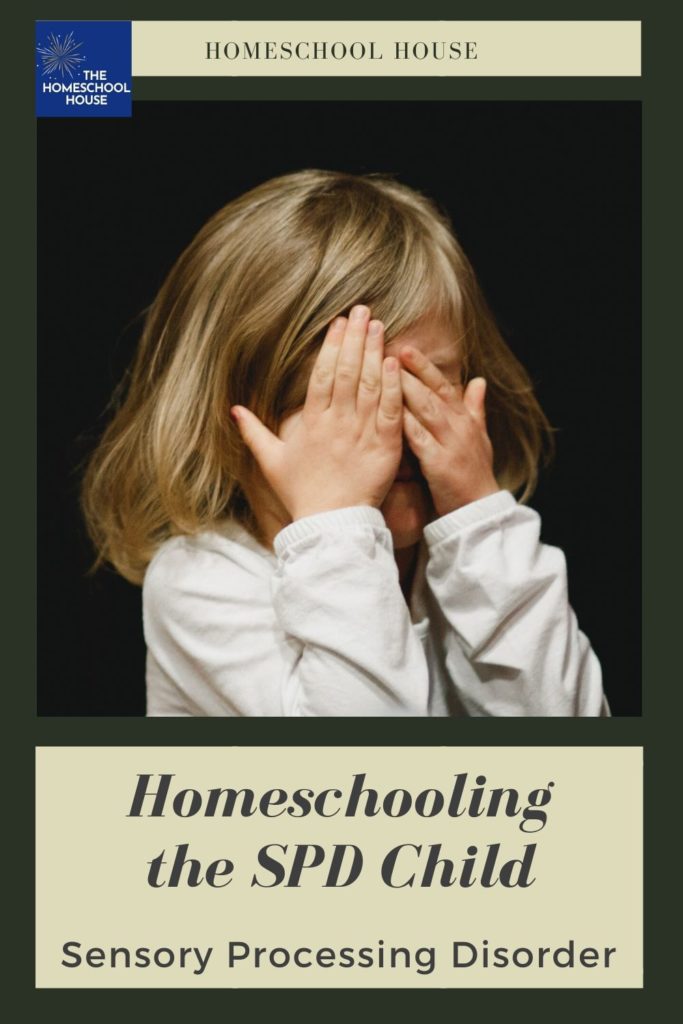
With Sensory Processing Disorder, normal daily demands in a classroom are stressful. Homeschooling provides an alternative for your child that allows him or her to grow with accommodations and love…
With SPD, normal daily demands in a regular classroom become stressful.
Bright lights can cause headaches
Humming lights are distracting
Hearing other kids breathing is annoying
People may be talking or laughing too loudly
The teacher’s words may be too fast or confusing
The sound of the school bell is scary
Smells may seem overwhelming
The seat may feel too hard
The clothes being worn may irritate the skin
The kid in the next seat may be too close for comfort
It is difficult to listen to the teacher and
write at the same time
SPD students may be labeled as ‘picky’ or ‘finicky,’ and
their issues may be ignored. This
response can lead to an emotional roller coaster.
It can be difficult for the student to label
emotions (they end up called ‘fear’)
It may be difficult to identify the source of
the problem
Once identified, it can be difficult to share
those emotions, and they are often dismissed
This can lead to a cyclic reaction, as the
struggles are then internalized, leading to more difficulty with regulating
emotions
The more heightened and dysregulated the
emotions, the more difficulty the student will have filtering out sensory
input.
Do you see the cycle??
Is your child highly sensitive? How many of these statements apply to your child?
Over-sensitive or under-sensitive to noise,
touch, smell, etc
Easily distracted
Agitated, anxious, or irritable
Poor tolerance for frustration
Impulsive, with poor self-control
Obsessive-compulsive
Repetitive, uses self-stimulation
Oppositional-defiant
Tunes out or withdraws
Has tantrums and meltdowns (beyond the toddler
years)
Rigid / inflexible thinking
Need to maintain control in situations
Need for routine, sameness, and predictability
Examples of self-stimulatory behavior include rocking, hand-flapping, vocalizing, or jumping. These behaviors are an attempt to self-regulate the arousal level and screen out unwanted stimulation when over-aroused. They can also be used to maintain alertness when under-aroused. These self-stimulating behaviors are often used early on, until the child learns other ways of regulating arousal.
It can be helpful to learn your child’s specific nervous system quirks.
What calms him?
What alerts him?
What are his sensitivities?
What overwhelms him?
What are his sensory preferences?
What interaction style is he drawn to (or does
he avoid)?
What learning style works best for him?
What helps him feel safe and accepted?
The SPD child may not have any issues during the school day, but while keeping it together, he is accumulating stress neuro-chemicals throughout the day. The teacher doesn’t see the problem, but it is the parent who experiences the meltdowns after the child gets home to a ‘safe’ environment. These ‘after-effects’ show up as meltdowns and shutdowns.
Meltdown
Shutdown
Stress chemicals reach boiling point Coping skills collapse Child acts out to escape or avoid situation and reduce anxiety Hitting, kicking, pushing, throwing, slamming, biting self or others, and head banging all provide proprioceptive stimulation which releases stress chemicals Occurs when chemicals build quickly
Stimulation becomes too overwhelming, and nervous system shuts down Child may be lethargic, limp, unresponsive, and staring or closing eyes Occurs when chemicals increase gradually
Many people see the child as oppositional and purposefully acting out, but in true meltdowns, the child loses all self-control. He is not being oppositional; his stress chemicals have reached a boiling point and overtaken him. Trying to counsel, scold, or reason during a meltdown is ineffective. Reasoning skills are neurologically unavailable at this point, and the child is often remorseful after calming. Punishment only works if the child has some degree of control over his behavior.
It is helpful to touch base with all teachers, support staff, and even relatives, to help them understand. To help your child develop a learning profile
Define comfort zones (what is calming)
Know which interaction style is most comforting
(what makes him feel safe)
Define sensory sensitivities and develop
accommodations
Know his strengths, weaknesses, dislikes, and
tolerance levels
Create a list of supports and best teaching
strategies
Know which triggers are the most overwhelming
and how to quickly soothe these
Learning to help your child with sensory disorders falls
into four categories
Organize Nervous System – Incorporate physical activity daily; consult with a doctor about a sensory diet, supplements, and medication (if needed).
Reduce Sensory Overload – Develop sensory accommodations to prevent overwhelm; establish a plan for calming meltdowns.
Reduce Confusion – Develop a routine, with visual strategies for transitions. Slow down the day, particularly during transitional times, and continually review with the child. Take changes slowly.
Establish Boundaries – Set clear boundaries for both the child and interactions with others. Set expectations and work with child on self-advocation (once older) and using accommodations. Respect his comfort zones.
Teaching Tools
There are many different strategies for helping the SPD
child learn to cope with daily stressors.
It is best to choose one too and work at instilling it before moving on
to the next. Select an
easy-to-incorporate one first, to help build self-confidence, before tackling
more difficult ones. Over time, these
can become a part of the daily routine.
Proprioceptive
Activities
Vestibular
Activities
Stretching Wall pushups Squeeze ball Run, jump, skip Lift, carry, push/pull heavy object Vacuum or sweep Play leap frog or tug-of-war Hit, kick, bounce, throw ball Calm, crawl, scoot, pull up Roll / knead dough or clay Wrestle, rough house, pillow fight Weighted vest, lap pad, or blanket
Jump on trampoline Swing on swing set or hammock Run, skip, ride bike Spin, rotate, swivel chair Sit & Spin Play on scooter or wagon Rock back and forth on rocking chair Hopscotch, tag, chase Swingset – slide, seesaw, trapeze Rock back and forth on therapy ball
Anti-Perfectionism
Help the child learn to fight perfectionism. All children, regardless of sensitivity, can
benefit from learning to ‘fail to succeed,’ meaning to learn from failure. Teach the child to focus on effort and
attitude, rather than performance.
Explain that ‘good enough’ is still good. (You can demonstrate this by baking cookies
that are purposefully less than perfect, and then having a tasting party! Are they perfect? No.
Are they good enough? Yes.) Make a game of making mistakes each day. (Obviously, not life-threatening ones.) Model how to own the mistake and learn from
it. Play games where there are ‘snags,’
such as Chutes & Ladders.
Relaxation Training
Integrated Learning Strategies has several breathing exercises for teaching children to self-soothe. Check them out at this page.
Attention & Focus
You may have to remind him to refocus several times a day, but try to do so without anger or frustration.
Break large tasks into smaller bits, and recognize the completion of these smaller tasks.
Use charts to help keep them focused on the tasks at hand.
So how does this play out in the real-world? You can break the cycle of the ABCs of SPD!
Antecedent
Behavior
Consequence
Asked to do something Homework assignment Community event
Hitting self or others Screaming Hiding
Escape / avoid task at hand
For each of the three antecedents, we’ve outlined possible cognitive or sensory deficits that lead to the behaviors and provided alternative procedures for approaching them.
For example, when asked to complete a task, the child may not understand multiple steps of instruction. By breaking the task into smaller chunks and allowing time to process the request, the child can feel successful.
Deficits
Procedures
Cognitive Delayed processing Multi-step direction difficulty Short attention span Trouble transitioning Difficulty with uncertainty
Sensory Sensitive to touch / noise / smell Overwhelmed by crowds Difficulty processing oral directions
Request Use short phrases and visual cues (c) Give time to process directions (c) Break task into smaller chunks (c) Use cues before transitioning (c)
Homework assignment Break homework into small chunks (c) Do one thing at a time, with breaks (c)
Community event Use headphones or ear plugs to block noise (s) Avoid crowded times (s) Prepare by previewing what will happen (c)
If you have a child with Sensory Processing Disorder, then you already know that normal daily demands can be a bit of a minefield. You’ve probably already developed several strategies, perhaps unwittingly, to help him cope. Homeschooling provides an educational path for your child that allows him or her to grow with accommodations and love. You’ve got this, mama!